

Business Operation · 2025
In this section23 topics
- Corporate Information4 items
- Dividend Policy2 items
- Major Shareholders2 items
- Business Strategies Overview5 items
- Material Changes & Developments1 item
- Use of Proceeds from Securities Offerings1 item
- Commitments Made in the Registration Statement1 item
- Group Operating-Structure Policy1 item
- Companies Where the Company Holds ≥10%1 item
- Shareholders with Potential Conflict of Interest1 item
- Relationships Among Major Shareholders2 items
- Shareholders' Agreement1 item
- Shareholding Diagram (Group Structure)2 items
- Income Structure3 items
- Product / Service Characteristics2 items
- Research & Development7 items
- Assets Used in the Business4 items
- Marketing Policy & Competition2 items
- Procurement of Products & Services2 items
- Nature of Business — Overview1 item
- Projects Under Construction8 items
- Debentures & Bills of Exchange3 items
- Convertible Securities1 item
Corporate Information
Company Name
BANGKOK EXPRESSWAY AND METRO PUBLIC COMPANY LIMITED
Telephone
0-2641-4611, 0-2354-2000
Website
www.bemplc.co.th
companysecretary@bemplc.co.th
Dividend Policy
Dividend Policy
The Company has the policy to pay a dividend at not less than 40 percent of the net profit of each year, taking into account the operational results, financial structure and obligations, investment, as well as regular payment of dividends to shareholders. In this regard, the Board of Directors may pay an interim dividend to shareholders when it is of the view that the Company has sufficient profit and cash flow to pay a dividend. Once the dividend payment has been made, such dividend payment shall be reported to the following shareholders’ meeting.
Historical Dividend Payments
| This Year | Last Year | 2 Years Ago | 3 Years Ago | 4 Years Ago | Metric | Description |
|---|---|---|---|---|---|---|
| 0.25 | 0.24 | 0.22 | 0.15 | 0.05 | Net profit per share (Baht : Share) | Net profit per share (baht : share) |
| 0.15 | 0.15 | 0.14 | 0.12 | 0.08 | Dividend per share (Baht : Share) | Dividend per share (baht : share) |
| 0 | 0 | 0 | 0 | 0 | Dividend stock ratio (Number of original shares: dividend shares) | Ratio of stock dividend payment (existing share : stock dividend) |
| 0 | 0 | 0 | 0 | 0 | Dividend share value per share (Baht : Share) | Value of stock dividend per share (baht : share) |
| 0 | 0 | 0 | 0 | 0 | Total dividend payment value (Baht : Share) | Total dividend payment (baht : share) |
| 61 | 62 | 64 | 79 | 158 | Dividend payout ratio to net profit (%) | Dividend payout ratio compared to net profit (%) |
Business Strategies Overview
Chairman's Message
In 2025, the global economy continued to face volatility arising from multiple factors, compounded by the escalating severity of climate change, which has led to an increasing frequency of natural disasters. These developments have a direct impact on economic systems, society, and people’s quality of life. Such challenges have heightened awareness across all sectors of the importance of conducting business with greater responsibility toward society and the environment.
Bangkok Expressway and Metro Public Company Limited, or BEM, as a leading provider of expressway and mass rapid transit rail system services, remains committed to conducting its operations in accordance with the principles of good corporate governance, while integrating ESG considerations across all operational processes. The Company emphasizes on transparency in corporate governance, effective risk management, environmental and social responsibility, as well as continuous organizational development, in order to enhance our service standards in line with the evolving demands of the modern world.
With a solid financial position and prudent risk management policy, BEM has continued to be recognized for its creditworthiness. Fitch Ratings has assigned the Company’s national long-term rating at A(tha) with a “Stable” outlook, reflecting the strength of its financial structure, asset quality, and long-term business fundamentals. This recognition affirms BEM’s role as one of the country’s leading infrastructure service providers in the expressway and metro sectors.
Over the past year, BEM received awards and recognitions in corporate governance and sustainability, including:
An Excellent CG Scoring result (CG 5 Stars) and the ASEAN Asset Class PLCs award under the ASEAN CG Scorecard 2025, reflecting BEM’s position as a regional benchmark in corporate governance.
A SET ESG Ratings assessment at the AAA level, and continued inclusion in the Stock Exchange of Thailand’s “sustainable stocks” list in the services group, as well as inclusion among the ESG 100 securities in the transportation and logistics sector.
The “Climate Action Excellence” award, reflecting BEM’s leadership in efficient and sustainable energy management, and greenhouse gas emissions reduction.
Second Runner-up, “ASEAN Energy Efficiency and Conservation Best Practices Awards 2025”, from the ASEAN Energy Awards (AEA) 2025 in Malaysia, underscoring the organization’s exceptional capacity in sustainable energy conservation and management at the regional level.
These assessments and awards reaffirm BEM’s commitment to conducting businesses in accordance with the principles of Good Corporate Governance, accountability to stakeholder and the creation of value for society and the environment, while also maintaining financial stability, in pursuit of sustainable long-term growth.
In term of operating performance in 2025, BEM was able to sustain growth, recording a net profit of Baht 3,781 Million, representing an increase of Baht 13 Million from the previous year. The Board of Directors has thus resolved to propose to the Shareholders’ Meeting the approval of dividend payment for 2025 at the rate of Baht 0.15 per share, with the aim of delivering stable and consistent returns to shareholders.
On behalf of the Board of Directors, I would like to express my sincere appreciation to shareholders, expressway users, MRT passengers, business partners, public and private sector agencies, as well as all executives and staff, whose trust and dedication have been vital to BEM’s operations. The Company remains committed to conducting its business operations responsibly, with a focus on enhancing the quality of transportation services to ensure greater convenience, rapidity, and safety, while creating sustainable and long term value for all stakeholders.
(Mr. Plew Trivisvavet)
Chairman of the Board of Directors
Vision
The Company’s vision is to become a leading, fully-integrated transportation service provider in Thailand and ASEAN.
Objectives
The Company is committed to operating the businesses:
Providing services of the expressway and the rail mass rapid transit systems with safety, convenience, rapidity, reliability, punctuality, and efficiency, in order to improve the quality of people’s lives;
Improving the quality and efficiency of the modern and full-service transportation network in order to alleviate traffic problems, preserve the environment, and improve society and the country;
Creating value-added and utmost benefit to shareholders based on fairness to all stakeholders;
Adhering to sustainability principles in business operations by realizing good corporate governance as well as striving for social and environmental responsibility.
Goals
To invest in the transportation system projects, expressway and connecting road projects, rail mass rapid transit system projects, and related projects under the government policy for public-private partnership (PPP) in respect of infrastructure, including related business, such as various commercial development, taking into consideration the projects which are beneficial to society and the country, with reasonable business yields.
Business Strategies
To strengthen the businesses by generating revenues for continued growth, and managing costs and expenses efficiently, in order to maintain good financial standing;
To build relationships with stakeholders through the corporate social responsibility process and communicate with internal and external personnel about it;
To develop personnel ready for the provision of quality services of the expressway and the rail mass rapid transit systems;
To build social recognition of the corporate good image.
The Company’s businesses comprise the provision of the expressway and mass rapid transit rail system services, including commercial development directly related to the primary businesses. The Company’s business operation overview is as follows:
1.Expressway Business
The Company and NECL have obtained concessions from the Expressway Authority of Thailand (“EXAT”) for the construction and operation of a total of three projects, namely:
(1.1) The Si Rat Expressway Project (Second Stage Expressway)
The Si Rat Expressway is the first large-scale construction project in Thailand under a public-private partnership. This project is implemented on a BTO (Build Transfer Operate) basis, under which the Company shall invest in the design, construction and operation of the Si Rat Expressway. In this regard, the title to permanent constructions relating to, or used for the benefit of, the Si Rat Expressway shall be vested in EXAT. The Company shall be entitled to receive toll revenue as specified in the Agreement, including the right to conduct commercial development on the expressway structure areas. The Si Rat Expressway, with a total distance of 38.5 kilometers, has been open for service since 1993. On February 20, 2020, the Second Stage Expressway Agreement (Amendment) was signed for an extension of the concession period until October 31, 2035.
(1.2) The Prachim Ratthaya Expressway Project (Si Rat - Outer Ring Road Expressway)
The Prachim Ratthaya Expressway under the Concession Agreement for Investment, Design, Construction, Operation, Service, and Maintenance of the Si Rat - Outer Ring Road Expressway Project is implemented on a BTO basis, under which the Company shall be exclusively entitled to receive toll revenues throughout the concession period of 30 years, ending on December 14, 2042. The route starts from Kanjanapisek Road (Western Outer Ring Road adjacent to Mahasawat Water Treatment Plant) heading eastbound along the right of way of the existing Southern railway, crossing the Chao Phraya River around the Rama VII Bridge, ending around Bang Sue Grand Station (Chatuchak), connecting with the Si Rat Expressway southward around the Bus Terminal (Mo Chit 2), and running down to at-grade level around Kamphaeng Phet 2 Road, and connecting northward heading to Chaeng Watthana, covering a total distance of 16.7 kilometers. This route has been open for service since 2016.
(1.3) The Udon Ratthaya Expressway Project (Bang Pa-in - Pak Kret Expressway)
The Udon Ratthaya Expressway, operated by NECL under the Bang Pa-in - Pak Kret Expressway Project Agreement, is implemented on a BTO basis, under which NECL shall be entitled to receive toll revenues as specified in the Agreement, including the right to conduct commercial development on the expressway structure areas. The Udon Ratthaya Expressway, with a total distance of 32 kilometers, has been open for service since 1998. On February 20, 2020, the Udon Ratthaya Expressway (Amendment) was signed for an extension of the concession period until October 31, 2035. The Udon Ratthaya Expressway connects to the Si Rat Expressway around Chaeng Watthana Road northward heading to Bang Pa-in around Kanjanapisek Road (Western Outer Ring Road).
2.Rail Business
The Company has obtained concessions for the operation of three mass rapid transit rail system projects from the Mass Rapid Transit Authority of Thailand (“MRTA”), namely:
(2.1) The M.R.T. Chaloem Ratchamongkhon Line Project (MRT Blue Line)
The M.R.T. Chaloem Ratchamongkhon Line Project (MRT Blue Line) is implemented on a PPP Net Cost basis, under which MRTA shall invest in all costs of civil works and the Company shall supply, install the M&E Equipment, and provide the operation and maintenance services. The Company shall be entitled to farebox revenue as well as undertaking commercial activities and commercial development, including advertising, leasing of space within the project, and the telecommunications services business within the metro stations and rolling stocks. The concession period is 30 years from the full service opening of the entire route, i.e., March 30, 2020. The M.R.T. Chaloem Ratchamongkhon Line Project (MRT Blue Line) has connected to the M.R.T. Chalong Ratchadham Line Project (MRT Purple Line) at Tao Poon Station and has also connected to the MRT Orange Line Project at Thailand Cultural Centre Station and Bang Khun Non Station.
(2.2) The M.R.T. Chalong Ratchadham Line Project (MRT Purple Line)
The M.R.T. Chalong Ratchadham Line Project, Bang Yai - Bang Sue Section (Khlong Bang Phai Station - Tao Poon Station), is implemented on a PPP Gross Cost basis, under which the Company shall invest in procurement of the M&E Systems, provide the operation and maintenance services; and MRTA shall invest in all costs of civil works and the Company shall invest in costs of the M&E Systems and rolling stocks, as well as provision of the operation and maintenance services in accordance with the specified service standards. MRTA shall be entitled to all farebox revenue and commercial development revenue from the utilization of the civil infrastructure and the metro systems and MRTA shall make gradual repayment for the M&E Equipment to the Company on a monthly basis for a period of 10 years, and shall engage the Company to conduct the O&M throughout the concession period of 30 years from September 4, 2013.
(2.3) The MRT Orange Line Project (Bang Khun Non - Min Buri (Suwinthawong) Section)
The MRT Orange Line Project: Bang Khun Non - Min Buri (Suwinthawong) Section is implemented on a PPP Net Cost basis, under which MRTA shall invest in costs of civil works of the MRT Orange Line Project (East Section) and the Company shall invest in costs of civil works of the MRT Orange Line Project (West Section) and costs of the M&E Systems, rolling stocks, as well as system operation and maintenance management of the entire route. The Company shall have the exclusive right to collect farebox revenue, including commercial development inside and outside the metro stations, elevated and underground structures, rolling stocks, and other building connections to the project for a period of 30 years starting from the commencement date of the commercial operation of the MRT Orange Line Project (East Section). In this regard, MRTA shall subsidize the costs of the civil works of the MRT Orange Line Project (West Section), which shall be reimbursed to the Company in installments within a period of 6 years, starting from the third year, and the Company shall pay the concession fee to MRTA in accordance with the conditions specified in the Agreement. On July 18, 2024, the Company and MRTA signed a PPP Agreement, with an operational period of 33 years and 6 months.
The MRT Orange Line Project, Bang Khun Non - Min Buri (Suwinthawong) Section, has its route alignment connecting eastern Bangkok and western Bangkok, covering a total distance of 35.9 kilometers, with 28 stations.
(1) The MRT Orange Line Project (East Section)
The project is in the process of designing, producing, procuring, and installing the M&E Systems, along with other related systems, and computer programs in carrying out the entire project management of the MRT Orange Line Project (East Section), together with an Individual Testing and Trial Run. It is expected to open for service by 2028.
(2) The MRT Orange Line Project (West Section)
The project is in the process of designing, constructing civil works, including designing, producing, procuring, and installing the M&E Systems, along with other related systems of the MRT Orange Line Project (West Section), and computer programs in carrying out the entire project management, together with an Individual Testing, Integrated System Testing, and Trial Run.It is expected to complete construction and open for service by 2030.
The MRT Orange Line Project has connected to the M.R.T. Chaloem Ratchamongkhon Line Project (MRT Blue Line) at Thailand Cultural Centre Station and Bang Khun Non Station.
3.Commercial Development Business
Given that the Company is exclusively entitled to conduct commercial development as specified in the relevant Concession Agreement, the Company has appointed Bangkok Metro Networks Limited (“BMN”), its subsidiary, to serve as the Company’s management representative for commercial development in the metro and expressway projects, with its business operations being divided into three categories, namely:
1) Procurement and/or production of advertising media are in various formats, including 1. Static media, comprising light box media, sticker wrap media; 2. Digital media, for which the Company has developed various innovative formats, such as 3D pop-up displays, product displays, scent and sound media, as well as interactive formats, including the application of various technologies to enhance awareness, experience, and attractiveness of advertising media. Such advertising media are installed within mass rapid transit stations, covering areas from station entrances and exits to platform levels, as well as inside trains operating on the MRT Blue Line, and within expressway areas where the Company has been granted the right to commercial space management. The target customers consist of advertising media agencies and direct customers, representing approximately 70 percent and 30 percent, respectively.
2) Lease of retail areas is divided into three categories, namely 1. Paid areas (lease areas) within Metro Mall at the MRT Blue Line stations and retail spaces within expressway areas; 2. Lease areas outside Metro Mall areas for retail operations or for organizing marketing activities in retail areas or concourse levels, with due consideration given to service safety and the convenience of mass rapid transit users; and 3. Lease spaces for the installation of various types of automated service machines, such as financial service machines or machines providing various goods and services. In this regard, the leasing and provision of retail spaces involve the careful selection of product and service categories to meet passenger needs while also taking into account the utilization of spaces to generate benefits for society.
3) Telecommunications Network Services and Maintenance: The Company, a Type II Telecommunications Business Licensee with its own network permitted by the Office of The National Broadcasting and Telecommunications Commission (Office of the NBTC), has installed a telecommunication network to receive, transmit, and distribute mobile phone signals to support 5G technology services at 22 underground stations, covering areas inside both metro stations and tunnels. It can support the current service frequency bands that the Office of the NBTC has licensed to the private sector. Furthermore, the Company leases out areas at 15 elevated stations on the MRT Blue Line Extension to private mobile phone operators for the installation of signal distribution equipment to ensure the provision of quality service to MRT passengers.
Material Changes & Developments
Material Changes & Developments
| Year | Description |
|---|---|
| 2,024 | (28 Feb 2024) The Board of Directors’ Meeting No. 1/2024 resolved to approve the share repurchase scheme for financial management purposes (Treasury Stock), with a maximum budget of Baht 4,000 Million and a number of shares to be repurchased not exceeding 450 million shares, representing 2.94 percent, which did not exceed 10 percent of all the Company’s shares sold, with a term from March 5, 2024 to September 4, 2024. |
| 2,025 | (28 Oct 2025) Fitch Ratings has assigned the Company’s national long-term rating at A(tha) with a Stable outlook, reflecting the Company’s strength and potential, which are derived from stable long-term concessions which have consistently generated increasing revenue and profits. |
| 2,024 | (18 Jul 2024) The Company signed the Concession Agreement for the MRT Orange Line Project, Bang Khun Non - Min Buri (Suwinthawong) Section, with MRTA under the PPP Net Cost scheme. |
| 2,024 | (23 Jul 2024) The Company signed a contract engaging CH. Karnchang Public Company Limited to manage and construct the civil works of the MRT Orange Line Project (West Section), Bang Khun Non - Thailand Cultural Centre Section, and to design, procure, install, test the M&E Equipment and trial run (East and West Sections) on a lumpsum turnkey basis, and signed a credit agreement for the MRT Orange Line Project, Bang Khun Non - Min Buri (Suwinthawong) Section, consisting of a revolving credit agreement for civil works worth Baht 43,700 Million and a non-revolving credit agreement for M&E works worth Baht 24,280 Million. |
| 2,024 | (31 Oct 2024) The Extraordinary General Meeting of Shareholders No. 1/2024 approved the signing of an agreement for the procurement of additional rolling stocks and improvements to the related MRT systems of the M.R.T. Chaloem Ratchamongkhon Line Project, in the total amount of Baht 6,800 Million, to accommodate the increasing number of passengers. |
Use of Proceeds from Securities Offerings
Is There Money Raised from a Securities Offering Still to Report On?
No
Commitments Made in the Registration Statement
Are There Commitments or Conditions from an Offering or Listing?
No
Group Operating-Structure Policy
Description
The Company has invested in its two subsidiaries, namely NECL and BMN. The business operations of the subsidiaries are of the following nature:
NECL is a company founded to carry out construction and management of the Udon - Ratthaya Expressway under the Bang Pa-in - Pak Kret Expressway Project Agreement; and
BMN is a company founded to operate the commercial development business, which is mostly related to the Company’s current concession agreements for both the metro and expressway systems.
Companies Where the Company Holds ≥10%
Companies (≥10% Holding)
| Company Name | Address | Province | Zip Code | Telephone | Fax | Business Type | Security Type | Shares | Paid-up Shares |
|---|---|---|---|---|---|---|---|---|---|
| NORTHERN BANGKOK EXPRESSWAY COMPANY LIMITED | 587 Sutthisarn Road, Ratchadaphisek Subdistrict, Dindaeng District | Bangkok | 10400 | 0 2641 4647 | - | Construction and management of the Udon - Ratthaya Expressway | Common shares | 294,000,000 | 294,000,000 |
| NORTHERN BANGKOK EXPRESSWAY COMPANY LIMITED | 587 Sutthisarn Road, Ratchadaphisek Subdistrict, Dindaeng District | Bangkok | 10400 | 0 2641 4647 | - | Construction and management of the Udon - Ratthaya Expressway | Preferred shares | 306,000,000 | 306,000,000 |
| BANGKOK METRO NETWORKS LIMITED | 832 Sutthisan Road, Ratchadapisek Subdistrict, Dindaeng District | Bangkok | 10400 | 0 2690 8200 | - | Procurement and production of advertising media in various forms, and commercial development in the metro and expressway systems | Common shares | 25,400,000 | 25,400,000 |
Income Structure
Product / Service Income
| Category | Description | This Year | This Year % | Last Year | Last Year % | 2 Years Ago | 2 Years Ago % |
|---|---|---|---|---|---|---|---|
| Total revenue from operations | Total revenue from operations | 16,915,820 | 100 | 17,003,640 | 100 | 16,374,410 | 100 |
| Revenue from expressway business | 8,832,968 | 52.22 | 8,940,888 | 52.58 | 8,919,153 | 54.47 | |
| Revenue from rail business | 6,905,629 | 40.82 | 6,830,139 | 40.17 | 6,338,462 | 38.71 | |
| Revenue from commercial development business | 1,177,223 | 6.96 | 1,232,613 | 7.25 | 1,116,795 | 6.82 | |
| Other | Other | 0 | 0 | 0 | 0 | 0 | 0 |
Export Income
| Category | Description | This Year | This Year % | Last Year | Last Year % | 2 Years Ago | 2 Years Ago % |
|---|---|---|---|---|---|---|---|
| Total revenue | Total revenue from operations | 16,915,820 | 100 | 17,003,640 | 100 | 16,374,410 | 100 |
| Domestic | Domestic | 16,915,820 | 100 | 17,003,640 | 100 | 16,374,410 | 100 |
| International | International | 0 | 0 | 0 | 0 | 0 | 0 |
| Thailand | Thailand | 0 | 0 | 0 | 0 | 0 | 0 |
| Other countries | Other countries | 0 | 0 | 0 | 0 | 0 | 0 |
Other Income
| Operating Other Income | Non-Operating Other Income | Share of Profit |
|---|---|---|
| 1710 · As of year: 675174.0 · Description: Total other income · As of yesteryear: 762213.0 · As of year before yesteryear: 764306.0 · 1711 · As of year: 0.0 · Description: Other income from operations · As of yesteryear: 0.0 · As of year before yesteryear: 0.0 | 1712 · As of year: 675174.0 · Description: Other income not from operations · As of yesteryear: 762213.0 · As of year before yesteryear: 764306.0 · 72197.0 · Description: Interest income · As of yesteryear: 164993.0 · As of year before yesteryear: 179362.0 · 558373.0 · Description: Dividend income · As of yesteryear: 558373.0 · As of year before yesteryear: 558373.0 · 44604.0 · Description: Others · As of yesteryear: 38847.0 · As of year before yesteryear: 26571.0 | 1713 · As of year: 0.0 · Description: Share of profit · As of yesteryear: 0.0 · As of year before yesteryear: 0.0 |
Product / Service Characteristics
Business Type
3115
Business Groups
| Business Group | Description | ||||||||||||||||||||||||||||||
|---|---|---|---|---|---|---|---|---|---|---|---|---|---|---|---|---|---|---|---|---|---|---|---|---|---|---|---|---|---|---|---|
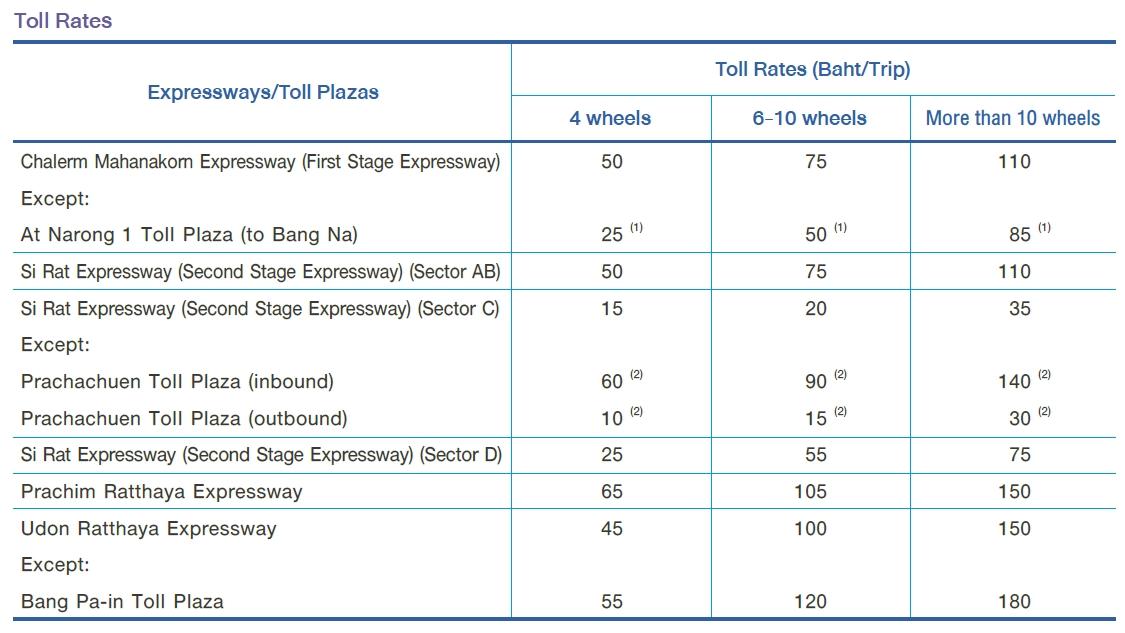
| Expressway Business | 1.The Si Rat Expressway In the operation of the Si Rat Expressway, the Company is responsible for toll collection, rescue and maintenance services. The Si Rat Expressway has the total distance of 38.5 kilometers, and its route alignment is divided into three sectors, as follows:
The Chalerm Mahanakorn Expressway and the Si Rat Expressway are subject to a revision to their respective toll rates every 10 years at the rates as specified in the Agreements, with their next revision taking place on September 1, 2028. 2.The Prachim Ratthaya Expressway In the operation of the Prachim Ratthaya Expressway, the Company is responsible for toll collection, provision of services and maintenance of the expressway, and the Company is entitled to receive all toll revenues and other income (if any). The project is an elevated six-traffic lane expressway, for a distance of 16.7 kilometers, with 9 toll plazas, with its route starting from the Outer Ring Road (Kanjanapisek Road around Mahasawat Water Treatment Plant) heading eastbound along the right of way of the existing Southern railway, crossing the Chao Phraya River around the Rama VII Bridge, ending around Bang Sue Grand Station (Chatuchak), connecting with the Si Rat Expressway southward and running down to at-grade level around Kamphaeng Phet 2 Road, with its route connecting with the northern part of the Si Rat Expressway heading to Chaeng Watthana continuing along the Udon Ratthaya Expressway. The Prachim Ratthaya Expressway is subject to a revision to its toll rates every 5 years from the date of service operation of the project at the rates of Baht 15, Baht 25 and Baht 35 for four-wheeled vehicles, six-wheeled to ten-wheeled vehicles; and more than ten-wheeled vehicles, respectively, as specified in the Agreement, with the first revision taking place on December 15, 2021, and its next toll revision taking place on December 15, 2026. 3.The Udon Ratthaya Expressway The operation of the Udon Ratthaya Expressway is carried out by the Company’s subsidiary, namely NECL. NECL is responsible for toll collection, rescue and maintenance services. NECL is entitled to receive all toll revenues. The Udon Ratthaya Expressway is divided into 2 stages, namely, Stage 1, Chaeng Watthana - Chiang Rak, and Stage 2, Chiang Rak - Bang Sai, connecting to the Si Rat Expressway in an area of Chaeng Watthana Road, with a total distance of 32 kilometers. For inbound traffic, expressway users pay tolls at the toll plazas located at the expressway on-ramps, while for outbound traffic, tolls are collected at the expressway off-ramps. The toll rates are subject to revision every 10 years in accordance with the rate specified in the Agreement, with the next revision scheduled for November 1, 2028.
Remarks: (1)The rates were after the deduction of Baht 25 discount for all types of vehicles (from January 1, 2025 to December 31, 2025). (2)In case of the expressway users accessing the service of the Second Stage Expressway continuing from Sector AB to Sector C at Prachachuen Toll Plaza (outbound) or from Sector C to Sector AB at Prachachuen Toll Plaza (inbound), the tolls of the Second Stage Expressway for all types of vehicles will be offered at a discount of Baht 5 throughout the agreement period. The details of the expressway linking networks in Bangkok and its vicinity are as follows:
| ||||||||||||||||||||||||||||||
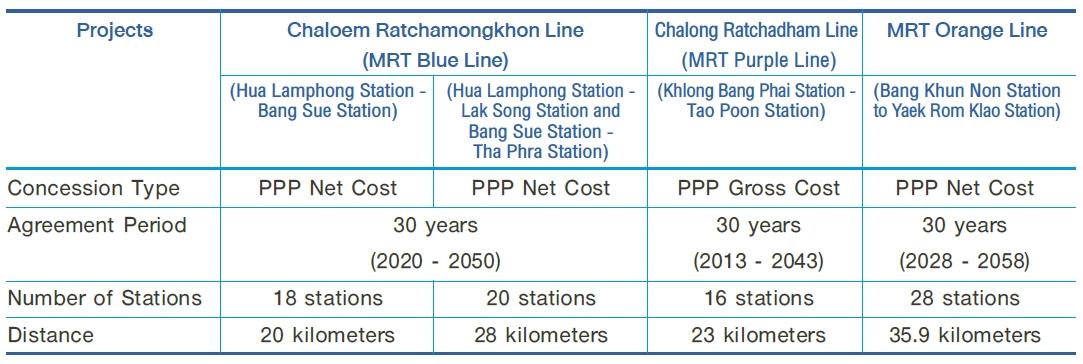
| Rail Business | The M.R.T. Chaloem Ratchamongkhon Line Project (MRT Blue Line): The Company is responsible for the supply, installation, testing, and commissioning of the M&E Equipment, provision of services to ensure a continuous operation as a single network (Through Operation), and the Company is entitled to farebox revenue as well as undertaking commercial activities and commercial development, including advertising, leasing of space within the project, and the telecommunications services business within the metro stations and rolling stocks throughout the concession period of 30 years from the date of the service opening of the entire route. In this regard, the M.R.T. Chaloem Ratchamongkhon Line Project consists of the following:
In this regard, the M.R.T. Chaloem Ratchamongkhon Line Project (MRT Blue Line) has been fully opened for service along the entire route, covering the total distance of 48 kilometers, with 38 stations. A total of 54 trains are in operation. The train service operates every day, with no service holidays, from 06:00 - 24:00 hours. The M.R.T. Chalong Ratchadham Line Project (MRT Purple Line), Bang Yai - Bang Sue Section (Khlong Bang Phai Station - Tao Poon Station), covering a distance of 23 kilometers, with a total of 16 elevated stations, where Tao Poon Station is the Interchange Station with Bang Sue Station of the MRT Blue Line, which would make it possible for passengers’ interchange from the MRT Purple Line to the MRT Blue Line at Tao Poon Station, which in the future, would be connected with the MRT Purple Line Extension (Tao Poon - Rat Burana Section). The Company has been granted the concession for investment, supply of M&E Systems and O&M Services for the MRT Purple Line on a PPP Gross Cost basis. MRTA shall make gradual repayment for the M&E Equipment to the Company on a monthly basis for a period of 10 years, and shall engage the Company to conduct the O&M throughout the concession period of 30 years from September 4, 2013. A total of 21 trains are currently in operation. The train service operates every day, with no service holidays, from 05:30 - 24:00 hours on Monday to Friday, and from 06:00 - 24:00 hours on Saturdays, Sundays, and public holidays. The MRT Orange Line Project, Bang Khun Non - Min Buri (Suwinthawong) Section, covering a distance of 35.9 kilometers, with 28 stations, a mixed structure of underground and elevated tracks, 21 underground stations, and 7 elevated stations, divided into two sections as follows:
This project features a route connecting the eastern and western sides of Bangkok while also facilitating transit between Bangkok’s suburbs and downtown, with Thailand Cultural Centre Station and Bang Khun Non Station serving as connection points to the M.R.T. Chaloem Ratchamongkhon Line Project (MRT Blue Line). Additionally, there are stations that connect to other MRT lines along the route, forming a network that serves a wider travel area. The Company has been granted the concession on a PPP Net Cost basis, with an agreement period of 33 years and 6 months from the date of the Notice to Proceed. Under this arrangement, MRTA shall invest in the cost of civil works of the MRT Orange Line Project while the Company shall invest in the cost of civil works of the MRT Orange Line Project (West Section) as well as costs of the M&E systems, rolling stocks, system operation and maintenance of the entire route. The concession period for train operation services is 30 years from the service commencement date of the MRT Orange Line Project (East Section).
Revenue The Company’s revenues from the rail business can be divided into two categories, comprising farebox revenue and revenue from O&M Services.
| ||||||||||||||||||||||||||||||
| Commercial Development Business | Bangkok Metro Networks Company Limited (“BMN”) is a subsidiary of the Company and has been appointed as the management representative for commercial development for expressway projects and the MRT Blue Line Project. BMN’s role is to continuously support value creation for the Company’s core projects, covering the management of advertising media in various formats, the leasing and provision of retail spaces, event spaces, and areas for the installation of automated service machines, as well as the provision and maintenance of telecommunications networks. BMN’s commercial development operations are focused on enhancing areas within the MRT system to become more than mere transit spaces, with an emphasis placed on creating positive experiences for service users through the organization of a wide range of activities and initiatives, such as music and art events, the opening of spaces to encourage participation by youth and local communities, and collaboration with business alliances and government agencies in organizing marketing activities, in order to enhance the attractiveness and value of commercial areas, while also supporting operators’ businesses operating within such areas through various initiatives of the Company. At the same time, such activities contribute to the sustainable growth in MRT ridership. In addition, BMN provides advertising media spaces and other lease areas to interested customers beyond the commercial areas under concession granted to the Company by EXAT and MRTA.
|
Research & Development
Has R&D Policy (Y/N)
Yes
Introduction
Business Innovation Development
Delivering efficient services is the organization’s ultimate objective. Accordingly, the Company continuously promotes business innovation development to enhance value and build upon the success of existing innovations, as well as strengthening sustainability across all dimensions of its operations. The Company prioritizes the development of innovations that respond to the needs of society, communities, and all stakeholder groups, with the aim of delivering services that are of high quality, accurate, and rapid. This is intended to create sustainable value for service users and to generate long-term shared benefits for society. In the past year, the Company undertook the following initiatives:
1. Innovation Development of the Expressway Business
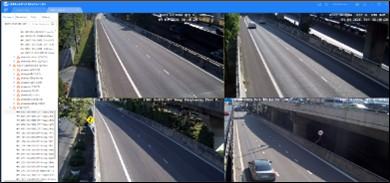
(1) Advanced Traffic Management System (ATMS)
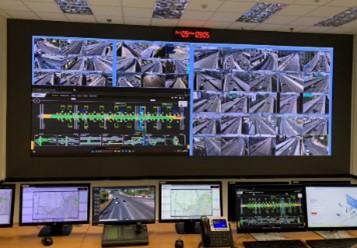
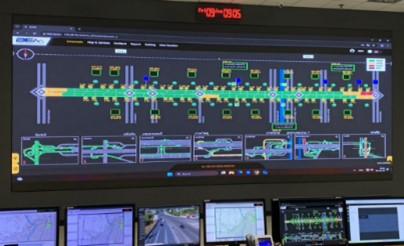
ATMS is a software that connects traffic facilities on expressways to display the facilities’ operating status, namely, Variable Message Signs (VMS), Mandatory Signs (MS), Emergency Telephone Systems (ETS), Closed Circuit Television Cameras (CCTV), covering the entire area of the Si Rat Expressway; and the ATMS system has been integrated with the Intelligent Video Analytics (IVA) equipped at the off-ramps and on-ramps without toll booths in order to detect vehicles which are not permitted to use expressways or driving in the wrong direction, whether people or animals, in which case, to provide alerts for any detected insecurity incident on expressways. In addition, the ATMS system can display a schematic map by showing shades of color to indicate the active traffic conditions in that area, with the device symbol showing on the schematic map, based on the actual position on expressways, to ensure greater convenience, speed, and efficiency in monitoring and management of traffic conditions. The ATMS system has been installed in the communication room of the Expressway Control Center. It has been in operation for the Si Rat Expressway since 2024 and has been in operation for the Prachim Ratthaya Expressway since October 2025.
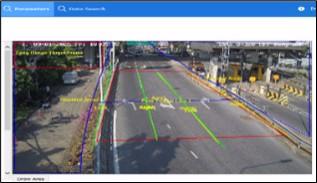
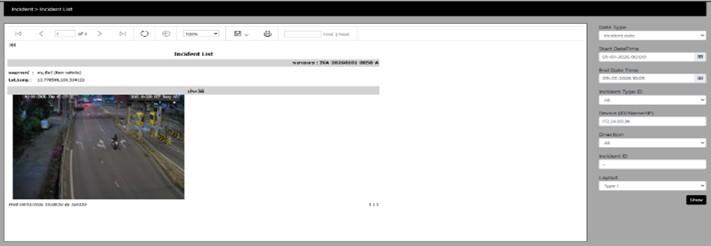
(2) Intelligent Video Analytic (IVA) Installation Project
The Company has installed Intelligent Video Analytic (IVA) system at the off-ramps and on-ramps without toll booths to detect vehicles, people, or animals entering the expressways, or wrong-way driving, thereby preventing accidents on all three expressways. In the event of any such occurrence, the system generates alert notifications in both text and audio formats to notify control center personnel, enabling them to verify the situation and take actions in accordance with the relevant standard operating procedures to contain and address the incident. In 2025, the IVA system was in use at the following ramps: 14 ramps on the Udon Ratthaya Expressway, 11 ramps on the Prachim Ratthaya Expressway, and 27 ramps on the Si Rat Expressway.
(3) Manual Toll Collection Software Development Project
The Company continued to improve the manual toll collection system software which was in use on the toll booth lanes. It has been developed and expanded to include the toll collection system software for use in the toll booth control room for controlling, tracking, and managing toll booth events, including the software in operation in the control center for rechecking toll transactions, generating reports, and statistical data, etc. The Company can develop its own toll collection system software at all levels, instead of hiring external contractors through the installation of replacement software to supersede the legacy software across all three expressways. The implementation for the Udon Ratthaya Expressway was completed in October 2025, and the rollout across all three expressways is expected to be completed by March 2026. The Company continues to enhance and develop the manual toll collection software to ensure adaptability to changes and to further improve service efficiency.
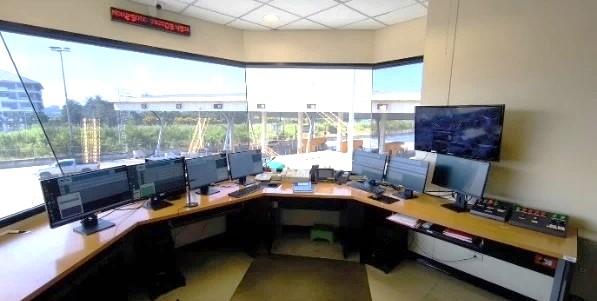
(4) Development of a Remote-Control Toll Collection System
The Company has developed a system that enables control personnel to remotely operate the toll collection system, thereby enhancing operational efficiency and reducing operating costs. The system was completely installed on the Prachim Ratthaya Expressway in August 2025.
(5) Variable Message Sign Improvement Project
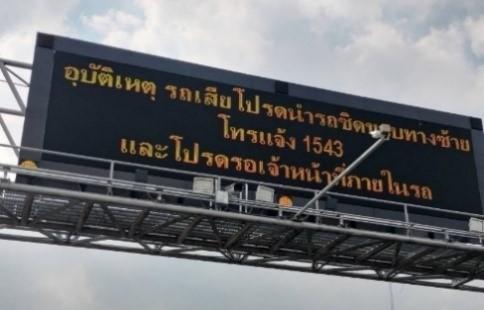
The Company upgraded the expressway traffic management system by replacing the Variable Message Signs (VMS) with full-color LED signs. The upgraded system can be operated through a centralized control program and coordinated with other routes, thereby enhancing the efficiency of communications with service users. In 2025, the Company upgraded three VMS signs on the Prachim Ratthaya Expressway, with completion scheduled for June 2026.
(6) Digital Technology
The Company continues to attach significance to strengthening cybersecurity. An Endpoint Detection and Response (EDR) system has been installed and implemented across the entire organization to strengthen the Company’s capability to prevent, detect, and respond appropriately to cyber threats, in parallel with the development and application of digital technology. The Company has commenced a pilot application of artificial intelligence (AI) to categorize and classify complaint data under the EMV fare payment system, which is expected to help reduce processing time and improve accuracy and consistency in decision-making. The Company also has a policy to further expand the use of AI in 2026. In addition, the Company is implementing a new ERP system to replace the existing system, in order to support changes in work processes and business expansion, as well as to integrate information systems for greater efficiency. It is expected to be completed by 2026.
2. Innovation Development of the Rail Business
In Terms of Products: Innovation and technology have played a significant role in daily life, leading to changes in passengers’ behaviors, for example, passengers now place greater emphasis on convenience, safety, and speed of use. As a result, payment systems have clearly shifted toward electronic or digital payments, with reduced reliance on cash and a continued transition toward a cashless society. Accordingly, the Company has developed and applied payment innovations to rail fare payments in order to broaden payment options and better respond to passengers’ needs.
EMV Contactless Fare Payment
The Company, in collaboration with financial institutions, has developed a fare payment system that supports EMV Contactless credit cards (VISA and Mastercard) issued by all banks, as well as EMV Contactless debit cards issued by Krung Thai Bank Public Company Limited and United Overseas Bank (Thai) Public Company Limited (UOB).
In 2025, the Company further expanded its EMV Contactless debit card collaborations with additional commercial banks in Thailand, namely Bank of Ayudhya Public Company Limited, KASIKORNBANK Public Company Limited, and Siam Commercial Bank Public Company Limited. Moreover, the Company expanded support for UnionPay credit cards (EMV Contactless - UnionPay) in cooperation with card issuers in Thailand, in order to provide additional fare payment options and facilitate passengers’ journeys.
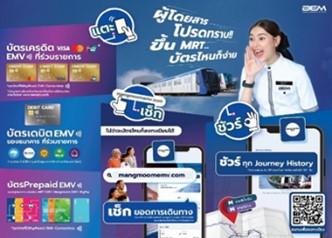
Furthermore, the Company expanded sales channels for the MRTA Mangmoom EMV VISA Card, which was developed jointly with Krung Thai Bank Public Company Limited, for use on the MRT Purple Line and the MRT Blue Line. This was to broaden coverage and enhance convenience in accessing EMV card fare payment services for all passenger groups, namely the general public, school/university students, and the elderly, and to support the future implementation of an integrated ticketing system.
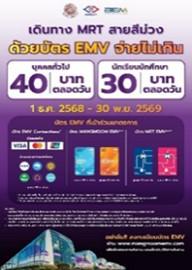
The Company also provided support for enhancements to the fare payment system to align with government policies, aimed at assisting the public in reducing travel expenses for public transport, including the following:
A 20-Baht maximum fare measure for travel throughout the entire route of the MRT Purple Line and the SRT Red Line (ended on November 30, 2025).
A 40-Baht daily fare cap measure for travel on the MRT Purple Line and the SRT Red Line (from December 1, 2025 to November 30, 2026).
Electronic Top-Up Channels for Fare Cards: The Company improved its system to support fare card top-ups via electronic applications, providing multiple online top-up channels, such as TrueMoney Wallet, Krungthai NEXT, and Shopee Pay. This helps save time for transactions within stations, increases convenience, reduces risks associated with cash usage, as well as enabling passengers to check their balances on their own, and allows them to benefit from promotions offered by application service providers.
Fare Payment under the State Welfare Scheme: The Company continued to proceed with the support of the fare payments under the State Welfare Scheme to facilitate public access and uphold government policy to increase accessibility to public transport and reduce travel expenses for low-income groups.
Fare Payment under the Khon La Khrueng Plus (Co-Payment) Scheme: The Company proceeded to support the exercise of the right under the Co-Payment Scheme and prepared the necessary equipment and personnel to implement the scheme in accordance with government policy, thereby helping alleviate the public’s travel expenses.
In Terms of Environment and Service Quality: The Company gives priority to the continuous development of rail services in order to enhance travel value and elevate passengers’ experience in all dimensions, with an emphasis on creating a convenient, safe, and efficient environment, while integrating new technologies that further improve service quality, in response to the evolving needs of stakeholders, including passengers, surrounding communities, and society. In 2025, the Company undertook the following service development and improvement initiatives:
Improvement of Air Quality and the Environment within Stations: The Company has implemented a project to install air curtains at 18 underground stations on the MRT Blue Line. It is expected to be completed for all station entrances and exits by 2028. In 2025, installation was carried out at an additional 21 entrances and exits to help reduce the leakage of cooled air, decrease energy consumption of the air-conditioning system, prevent PM 2.5 dust from entering from outside, and maintain a stable temperature within stations. As a result, passengers benefit from improved comfort and indoor air quality that is suitable for station use.
Development of Temperature Control System and Energy Utilization in Automatic Ticket Vending Rooms: The Company studied and developed an approach to control the air-conditioning system in automatic ticket vending rooms by installing ventilation fans, enabling the system to switch between air-conditioning mode and ventilation-fan mode during service and non-service hours. This helps reduce energy consumption without affecting passengers’ convenience, thereby reducing the workload of the air-conditioning system and boosting overall station energy efficiency. In 2025, the Company carried out additional implementation at elevated stations on the MRT Blue Line Project.
In Terms of Energy and Resource Utilization: To enhance efficiency, reduce costs, and serve as a model for clean energy use in office operations, the development of renewable energy innovations is another approach to building a complete and sustainable mass transit system. Beyond efficiency, the Company has a primary goal of reducing greenhouse gas emissions, a significant contributor to global warming. This is also a key approach to making the mass rapid transit system more environmentally friendly. In 2025, the Company undertook the following:
Development of Renewable Energy Systems and Reduction of Greenhouse Gas Emissions: The Company implemented several forms of solar energy projects, including Solar Farm and Solar Rooftop projects, to help reduce electricity consumption, lower energy costs, and reduce greenhouse gas emissions in alignment with the organization’s goals. These projects commenced in 2024 and were further expanded in 2025 to support the Company’s progress toward Net Zero.
Improvement of Energy Efficiency within the Maintenance Depot: The Company has continuously implemented a project to replace light bulbs and lighting fixtures with energy-efficient LED lighting in the maintenance depot areas for the MRT Blue Line and the MRT Purple Line projects. This initiative aims to enhance the energy efficiency of the lighting system and reduce overall energy consumption within operational areas.
Sustainable Water Resource Management: The Company has undertaken initiatives to develop water resource management within the maintenance depot by implementing a rainwater harvesting and reuse project to improve water use efficiency and reduce environmental impacts. The Company developed a system to collect and store rainwater and condensate from air-conditioning systems for reuse in maintaining green areas and supporting activities within the maintenance depot, thereby appropriately reducing tap water consumption. The Company also plans to expand the implementation to other areas in the following year in support of sustainable water resource management.
3.Innovation Development of the Commercial Development Business -None-
R&D Cost — Description
R&D expenditure over the past three years represents the Company’s ongoing expenditure for the continuous development of the Company’s innovation technologies, as follows:
Development of equipment for inspecting the integrity of spiral steel wires in expressway structures (Phase 1);
The Advanced Traffic Management System (ATMS);
The Intelligent Video Analytic (IVA) system installation project;
The manual toll collection system software development project;
The variable message sign (VMS) upgrade project;
Digital technology, such as the installation project of cybersecurity technology, including Endpoint Detection and Response (EDR) on the organization’s servers and clients, and the installation project of a Window Application Firewall (WAF) on the Company’s website;
The Asset Condition Monitoring and Diagnostics (ACMD) technology development project;
The development of a system enabling control personnel to remotely operate the toll collection system;
The installation of air curtains at underground stations of the MRT Blue Line;
The temperature control system and energy utilization management in automatic ticket vending rooms; and
The Project to replace light bulbs and lighting fixtures with energy-efficient LED lighting in the maintenance depot areas.
R&D Cost — Label
Research and development (R&D) expenses over the past 3 years (Million Baht)
R&D Cost — This Year
99.0
R&D Cost — Last Year
7.0
R&D Cost — 2 Years Ago
2.0
Assets Used in the Business
Permanent Assets — Description
1. Main assets
As of December 31, 2025, the Company and its subsidiaries had main assets used in business operations, as follow:
Building and equipment include Building and construction improvement, furniture, fixture and equipment, vehicles and assets under installations. The book value of the building and equipment is Baht 295 million.
Remark: The Company and the subsidiaries take a lease on building spaces for use as their Head Offices. For the operation building, the Company and its subsidiaries have been granted the right to use the operation buildings by the Concessionaire under the conditions of the respective Agreements.
Please consider in detail Attachment 4: Business Assets and Appraisal Details.
Intangible Assets — Description
2. Intangible assets
As of December 31, 2025, the Company and its subsidiaries had main intangible assets used in business operations, as follow:
Rights to Operate Expressway Sectors The rights to operate expressway sectors are considered the costs of construction of the Expressways and amortized according to the nature of utilization within the Concession period. The book value of the rights to operate expressway sectors is Baht 29,839 Million.
Intangible Assets under the Concession Agreement for the MRT Blue Line ProjectThe intangible assets under the Concession Agreement for the MRT Blue Line Project are considered the costs of construction of the MRT Blue Line Project and the installation of the equipment for commercial developments and amortized according to the nature of utilization within the Concession period. The book value of the intangible assets under the Concession Agreement for the MRT Blue Line Project is Baht 48,252 Million.
Intangible Assets under the PPP Contract for the MRT Orange Line Project (Currently Under Construction)The intangible assets under the PPP Contract for the MRT Orange Line Project are considered costs for the procurement and installation of the MRT system. The project is currently under construction and is expected to open for service on its East Section, Thailand Cultural Centre Station - Yaek Rom Klao Station Section, in early 2028 and its West Section, Bang Khun Non Station - Thailand Cultural Centre Station, in 2030, which will reach full service for the entire route. The book value of the intangible assets under the PPP Contract for the MRT Orange Line Project is Baht 12,518 Million.
Please consider in detail Attachment 4: Business Assets and Appraisal Details.
Has Subsidiaries Investment Policy (Y/N)
Yes
Subsidiaries Investment Policy — Description
As of December 31, 2025, the book value of the Company’s investments in subsidiaries under the separate financial statements amounted to Baht 768 Million, of which Baht 154 Million was invested in NECL, and Baht 614 Million was invested in BMN. Details of the Subsidiaries are given in Attachment 4.
The Company’s policy on investment is as follows:
To invest in businesses that are related to, similar to, or beneficial to, and support the Company’s business operations, in order to provide opportunities and long-term yields, and strengthen the Company’s stability and operational results.
To invest in projects or acquire ordinary shares in project operators, in a manner of long-term investments.
To invest up to the minimum proportion to allow the Company to participate in setting out policies, monitoring and inspecting operations of such companies in which the Company has invested.
Not to invest in any project giving rise to environmental impact or contrary to the public morals of the society.
Marketing Policy & Competition
Reporting Mode
3116
Per-Business-Group Breakdown
| Marketing Policy | Industry & Competition | ||||||||||||||||||||||||||||||||||||||||
|---|---|---|---|---|---|---|---|---|---|---|---|---|---|---|---|---|---|---|---|---|---|---|---|---|---|---|---|---|---|---|---|---|---|---|---|---|---|---|---|---|---|
Customer Characteristics and Target Customers of the Expressway Business Target customers among the expressway users refer to those motorists who desire convenient and rapid transportation or those who desire to shorten the traveling distance to their destinations as well as to avoid the traffic congestion along the congested normal roads in Bangkok and its vicinity. The groups of customers are then broad depending on their destinations, residences, and workplaces. Therefore, the revenues from the expressway systems will not depend on any particular group of customers. The customers by the types of vehicles using the expressways may be divided into four-wheeled vehicles; six-wheeled to ten-wheeled vehicles; and more than ten-wheeled vehicles. Approximately 98 percent of the types of vehicles using the expressways are four-wheeled vehicles. The traffic volume on the expressways in 2025 can be described by areas as follows:
Marketing Strategies of the Expressway Business The marketing advantage is that the Si Rat Expressway is designed to respond to the transportation needs through the expressway network which connects to and covers major areas in Bangkok, whether from the Chalerm Mahanakorn Expressway and the Si Rat Expressway, as well as the Chalong Rat Expressway (Ramindra-At Narong) which cover the areas from the North to the South and from the West to the East of Bangkok. The expressway users may use the expressway to connect to the Burapha Withi Expressway (Bang Na-Chonburi), and the Chalerm Mahanakorn Expressway and the Chalong Rat Expressway, thereby rendering the service of the expressway systems to become more complete for users to reach their destinations more conveniently and rapidly than using at-grade roads. The Prachim Ratthaya Expressway, a route connecting the Bangkok-Thonburi sides, has its route crossing the Chao Phraya River at the Rama VII Bridge, continuing along in parallel to the Southern railway via the districts of Bang Phlat, Bang Bamru, Taling Chan, passing Ratchaphruek Road, and ending at the Outer Ring Road (the West), thereby enabling the expressway users to conveniently and rapidly commute from and to Bangkok-Thonburi sides. On the inbound side, there is a connection point from the Boromarajonani overpass in Taling Chan area to the Prachim Ratthaya Expressway, at Km5 + 200, and a connection point with the Si Rat Expressway in Mo Chit area, Chatuchak, turning right southward to Phaya Thai - Silom and turning left to the northern part of the Si Rat Expressway, to ensure greater convenience in the expressway users’ travelling to Ratchadaphisek, Prachachuen, Chaeng Watthana, and Bang Pa-in, by using the Udon Ratthaya Expressway. The marketing disadvantage is the physical limitation which prevents the release of traffic around the expressway exits during the peak hours, which depends on the traffic on at-grade roads, representing an uncertain factor beyond the Company’s control. However, the Company continuously coordinates with traffic police in police stations of such areas, including linking video signals from CCTVs on the expressways to police stations of such areas, to provide assistance in releasing and facilitating traffic flow in the expressway systems by improving various on- and off-ramps for expressway users to save time and facilitate expressway users with more convenience and better quality of living in their commute in the downtown. Motorists should then appreciate these benefits over the price factor. Service and Product Strategies of the Expressway Business
Price Strategies of the Expressway Business
Distribution Strategies and Distribution Channels of the Expressway Business Payment of Tolls: The expressway users have three options for paying tolls: cash, Automatic Toll Collection System (Easy Pass), and credit or debit cards (EMV Contactless).
The use of Easy Pass for toll collection makes paying tolls at the front areas of the toll plazas during peak hours more convenient, rapid, and efficient, and it would be able to accommodate the future increase in traffic volume. Currently, Easy Pass users represent approximately 55.12 percent. Moreover, the Company, in collaboration with EXAT and the Department of Highways, carried out the integration between the Easy Pass system and the M-Pass system to allow the expressway users to pay tolls for seven expressway routes and two routes of the Intercity Motorways (Motorways) of the Department of Highways with a single pass.
| Competitive Conditions of the Expressway Business Overview of the Expressway Business The Company is the largest private expressway operator that operates the Si Rat Expressway, the Prachim Ratthaya Expressway, and the Udon Ratthaya Expressway, with a combined service length of 87.2 kilometers in Bangkok and its vicinity. At the same time, there is one other private operator providing similar expressway services, with its total service length of 28.0 kilometers. In comparison, the other private operator is one-third the size of the Company. Nevertheless, the Company’s network and the other private operator’s network are connected at a point north of the Makkasan swamp area on the Si Rat Expressway, which facilitates seamless, convenient, rapid, and safe travel for expressway users of both networks. In addition, both networks have routes connecting to the northern part of Bangkok and run in parallel from the northern part of Bangkok into central Bangkok, thereby providing expressway users with alternative travel options. From a physical connectivity perspective, the Company’s network connects with a greater number of other expressways routes than that of the other private operator, resulting in broader opportunities for comprehensive, interconnected travel. Overview of Thailand’s Economy in 2025 In 2025, Thailand’s economic condition continued to expand at a low pace, with gross domestic product (GDP) growth at 2 percent; exports increased, while private consumption and private investment showed slight growth compared with the previous year. Tourism, however, remained subdued, with 33 million international arrivals, below the target of 35 million. As tourism is a key revenue source for the country, this slowdown affected purchasing power and domestic spending. (Source: Prachachat Business, December 2025) In the fourth quarter of 2025, the government implemented economic stimulus measures, such as the “Khon La Khrueng Plus (co-payment)” scheme, which caused higher spending and contributed to GDP growth of 0.8 percent in that quarter. Accelerated disbursement of the government budget also increased spending in the economy. (Source: KASIKORN Research Center, November 2025) Meanwhile, private consumption and private investment continued to expand in line with the recovery in vehicle sales, particularly electric vehicles (EVs), supported by more affordable pricing. Newly registered passenger cars in November 2025 increased by 15.4 percent compared with the same period of the previous year, and domestic vehicle sales amounted to 51,044 units, an increase by 20.56 percent compared with the same period of the previous year. As for the first 11 months of 2025, total vehicle sales amounted to 546,045 units, an increase by 5.28 percent from 2024. (Source: Prachachat Business, December 2025) Impacts in 2025 In the first quarter of 2025, two unforeseen incidents occurred, namely: the collapse of a segment of a concrete beam under construction and a construction crane related to the Rama 3–Dao Khanong–Western Outer Ring Road Expressway Project. These incidents affected Rama II Road and the Chalerm Mahanakorn Expressway, which connects to the Si Rat Expressway. Due to safety concerns during construction, Rama II Road users avoided traveling through the construction area, which affected traffic volumes on the Chalerm Mahanakorn Expressway and the Si Rat Expressway. In addition, construction activities near the expressway right-of-way in the northern part of Bangkok, construction of the MRT Orange Line in Bangkok, the hybrid working model, and an earthquake in March that had an impact on tourism, resulting in tourist numbers below target, led to lower expressway traffic volumes, in particular, traffic decreased on the Si Rat Expressway (Sector D), which carries traffic from Suvarnabhumi Airport into the city center. However, in the fourth quarter of 2025, the economy began to expand, supported by a reduction in the policy interest rate, low inflation, and various stimulus measures. In December, both the public and private sectors organized year-end activities, such as campaigns to promote tourism in both primary and secondary cities and tax support measures linked to spending. As a result, expressway traffic volume increased by 1.4 percent in December compared with the same period of the previous year. Overall, average traffic volume in 2025 remained stable, with an upward trend expected in 2026. The Company remains committed to maintaining service quality and continuously carrying out expressway maintenance and repairs, to ensure that expressway users consistently receive the highest levels of convenience, speed, value for money, and safety. | ||||||||||||||||||||||||||||||||||||||||
Customer Characteristics and Target Customer Groups The target customer groups for rail service users comprise persons residing along areas surrounding the service routes, and persons who do not reside along the service routes but whose destinations are located within the service routes. In 2025, the number of passengers using the metro service was classified as follows:
In this regard, service users’ travel behavior is primarily influenced by convenience and time savings in selecting the rail system. The principal travel purposes are commuting to work, travelling to educational institutions, and tourism or leisure. Based on the information from the passenger satisfaction survey in 2025, the proportions of travel purposes are as follows:
Source: The Company’s compilation. Marketing Strategies of the Rail Business
| Competitive Conditions of the Rail Business Mass Transit Systems in Bangkok and its Vicinity Rail mass transit system is a key infrastructure supporting public travel in Bangkok and its vicinity, which serves as the country’s center for economic activity, employment, education, and tourism. Over recent decades, population density and urban expansion have driven a significant increase in travel demand, while the road network has been unable to adequately accommodate the growing number of vehicles. This has led to the development of rail systems as a principal means of relieving traffic congestion and improving travel efficiency. It is systematically integrated with other modes of public transport in the city and also contributes to reducing PM 2.5 dust levels. Public transport in Bangkok comprises conventional bus services (including buses, songthaews (shared pickup truck), and vans), bus rapid transit (BRT), suburban and urban rail services, passenger boats operating on rivers and canals, and multiple mass rapid transit lines. Within the urban area, rail systems play a crucial role in serving passengers who require speed, punctuality, safety, and comprehensive connectivity across different areas. Competitive Structure of the Rail Industry Competition in the rail industry has distinctive characteristics, as each route is operated under a concession agreement by different service providers. Accordingly, operators do not directly compete with one another across all areas. Nevertheless, rail systems still face competition in terms of their role as a “travel option for the public”, along with other modes of transport such as private cars, motorcycles, passenger vans, taxis, buses, and app-based ride-hailing services. In this regard, the public’s travel in Bangkok can generally be classified into two systems: private transport and public transport. 1. Private Transport System Although the government promotes the use of public transport to reduce energy consumption and pollution, private cars continue to play an important role in the daily lives of many people. Key factors supporting the continued growth of private transport include the expansion of residential areas into the metropolitan outskirts, which increases commuting distances between homes and workplaces, as well as the income capacity of middle- to high-income households that facilitates private car ownership. Consumers also continue to value the convenience, privacy, and flexibility of travel features that public transport cannot fully replace.Nevertheless, consumer behavior, particularly among younger generations, is changing. According to the Global Automotive Consumer Study: Southeast Asia Perspectives (2025), younger consumers show a lower propensity to purchase private cars and are increasingly interested in integrated mobility services, or Mobility-as-a-Service (MaaS). In addition, energy cost factors, especially volatile fuel prices, together with heightened environmental awareness and the increasing severity of fine particulate matter (PM 2.5) in recent years, have accelerated a shift toward cleaner energy and alternative mobility options, such as electric vehicles (EVs) and more environmentally friendly public transport. While the industry direction is moving toward EVs to reduce pollution, the survey also indicates that preference for internal combustion engine (ICE) vehicles in certain areas has not declined as rapidly as anticipated. Over the long term, the continued development of the rail network will be a key factor in helping rebalance private car use and public transport, particularly where rail routes are integrated to provide seamless connectivity to communities and major economic centers, such as office buildings, shopping malls, and government offices. 2. Public Transport System Bangkok’s public transport system has continued to develop progressively. Heavy traffic congestion during peak hours, together with the expansion of real estate projects along the routes, has driven sustained growth in demand for mass transit services, particularly electric rail systems, which have become a core component of urban mobility. This reflects changing travel behavior among urban residents, who increasingly prioritize convenience, speed, punctuality, and reduced travel time. At present, Bangkok’s public transport system comprises bus services, suburban rail services, and multiple mass rapid transit lines. These modes play complementary roles in strengthening a travel network that is more connected, comprehensive, and efficient, thereby responding to the public’s travel demand and urban expansion in the long term.
The Proportion of the Length of the Currently Operational Electric Train Network Sources: Office of Transport and Traffic Policy and Planning (OTP), and information on the MRT Pink Line Project, including the Muang Thong Thani Extension with 2 stations, from the website of BTS Group Holdings Public Company Limited. The continued growth trend in the number of electric rail service users highlights that electric rail travel has become a vital option for accessing the city center and key economic districts, helping to avoid traffic congestion while offering safety, convenience, speed, and predictable travel times. Accordingly, if in the future the government sector can further expand the electric rail network to cover more suburban areas and integrate it into a single, interconnected network, this would help mitigate air pollution and greenhouse gas emissions that result from private car use, alleviate traffic congestion, enhance travel equity, and generate positive long-term effects on the development of the real estate, economy, and environment sectors in a sustainable manner. Progress of Development of the Mass Rapid Transit Systems under the Government Policy
Industrial Outlook and Government Policy of the Rail Business Economic conditions and government policies continue to play an important role in shaping the competitive landscape of the rail system business in Thailand. Overall, Thailand’s economy in 2025 expanded by 2.4 percent, a decelerating from 2.9 percent in 2024, primarily driven by a slowdown in private consumption and government spending. Nevertheless, the Thai economy continued to be bolstered by ongoing growth in merchandise exports, a recovery in private investment, and the acceleration of government capital expenditure and budget disbursements aimed at stimulating economic activity. For the 2026 economic outlook, the Thai economy is projected to expand within the range of 1.5 to 2.5 percent, supported by key factors such as government investment measures, public expenditure programs, and the recovery of the tourism and service sectors; nevertheless, the economy remains subject to external risks and constraints, including volatility in the global economy and trade due to uncertain trade measures, high levels of household and corporate debt, and increasing climate variability leading to the implementation of more stringent environmental regulations. (Source: Office of the National Economic and Social Development Council) In this economic context, the role of the public sector is therefore a key factor in shaping the direction of competition in the rail system industry, through the implementation of measures aimed at improving access to mass transit and easing the cost-of-living burden on the public, for example, promoting an integrated ticketing system, which helps connect all modes of travel, reduces the need to carry multiple cards, or to use multiple applications, and supports payment innovations, such as e-wallets and QR Transit to enhance convenience, equity, and transparency for passengers. In addition, the government sector has continued to advance measures to lower transportation-related living costs, with its approval of the implementation of the “THB 40 daily flat fare cap” measure for the SRT Red Line and the MRT Purple Line as a pilot phase, prior to expanding coverage to all lines in the next phase. It has also been studying the establishment of an integrated mass transit management centre (Single Ownership) with an aim of introducing a unified fare structure. Furthermore, the “Kon La Khrueng Plus” scheme helps lessen the cost-of-living burden and strengthen purchasing power, allowing eligible users to apply the benefit to all forms of public transport via the “Pao Tang” application, including rail systems, buses, ferries, and interprovincial buses. Nevertheless, the implementation of these measures must be considered in conjunction with the overall economic context to ensure that the promotion of mass transit usage remains balanced and sustainable, and can appropriately meet the public’s needs over the long term. | ||||||||||||||||||||||||||||||||||||||||
Advertising Media In 2025, out-of-home (OOH) advertising expenditure on media under BMN’s management continued to attract strong interest from major advertisers across a wide range of industries, particularly real estate, technology and communications, financial services, and consumer products. These sectors have consistently maintained advertising budgets and represent a high proportion of advertising media spending within the MRT system, reflecting advertisers’ confidence in the effectiveness of MRT-based OOH media in reaching urban consumers. Advertising media within the MRT system is designed to form part of the service users’ travel experience, from station entrances and exits, circulation areas within stations, and platform levels, through to the interior of trains, enabling brand communications to reach passengers continuously throughout their journeys. Media placement is guided by analysis of passengers’ space-use behavior in order to select the most suitable media formats for each location. This includes static media, such as light boxes and sticker wraps in circulation areas, and dynamic media in the form of digital screens, which enhance communication effectiveness and strengthen customers’ brand recall. The Company and BMN place importance on creative concept development, innovation, and the application of technology to elevate advertising media formats so that they are distinctive, engaging, and capable of delivering a positive experience for advertisers’ target audiences, by developing a “Network Package” approach to media sales to expand advertising coverage across multiple stations simultaneously, and have also extended media development to external station infrastructure areas, such as key station entrances and exits (e.g., Sukhumvit Station and Si Lom Station), to increase visibility among general service users and persons outside stations. The Company’s advertising media sales comprise purchases through advertising agencies, representing approximately 70 percent, and direct purchases by product and service owners, representing approximately 30 percent. The Company and BMN have studied and understood product and service characteristics, advertising objectives, and target audiences, in order to provide input for selecting appropriate media and achieving maximum effectiveness. In 2025, the top five industry groups with the highest advertising expenditure were technology and communications, non-alcoholic beverages, credit and debit cards, websites and digital platforms, and insurance, respectively. This reflects demand for building brand awareness and recall during travel and in the course of daily activities. The Company’s operations are carried out under the principle that customers are primary partners. When customers achieve success and satisfaction, the Company also achieves its objectives. Accordingly, the Company’s service policy is “enhancing the quality of advertising media, providing prompt service, supporting partners’ businesses, and building while also maintaining strong relationships”. The Company prioritizes this approach due to its potential to sustain long-term customer satisfaction. Retail Space Leasing within MRT Stations The Company focuses on managing and developing rental spaces within MRT stations to be more than commercial space, under the concept of “creating a shared experience within station areas”, while also selecting product and service operators that align with the lifestyles of service users at each location. This is intended to make Metro Mall areas and surrounding rental spaces more dynamic and better suited to daily use. The Company places importance on enhancing common areas within Metro Mall to accommodate marketing and creative activities throughout the year, such as activities relating to art, music, film, sports, tourism, and family-oriented events. In 2025, a wide range of activities was organized across key stations and major transit hubs, such as Chatuchak Park, Phahon Yothin, Phra Ram 9, and Sukhumvit, including stations serving as interchanges with high service user volumes. In addition, the Company expanded formats of rental spaces and services to include additional areas along station walkways in underground and elevated stations compared to the previous year, in response to service users’ preference for convenient and rapid access to goods and services. This emphasized locating shops and service points in high-traffic areas and ensuring appropriate linkage with marketing activities within stations. Telecommunications Network Services and Maintenance Enabling passengers to use mobile phone services efficiently and with good quality throughout their journeys is another mission to which the Company gives priority. The Company has a dedicated team with specialized expertise to maintain the telecommunications network and also works with expert teams of mobile network operators licensed by the Office of the NBTC to regularly monitor service signal quality. As a result, passengers are able to use mobile phone services within MRT stations throughout every stage of their journeys. | Competitive Conditions of the Commercial Development Business Advertising Media The growth rate of the overall advertising industry, compared to the same period of the previous year, declined by 1-3 percent (Source: Nielsen), reflecting an environment in which competition remains highly intense amid shifting consumer media consumption behaviors. When analyzed by media category, the media segment with the most significant decline in growth was newspapers, followed by digital media, radio, magazines, and television. By contrast, out-of-home (Outdoor) advertising and transit media in the mass transit system continued to demonstrate strong growth momentum, reflecting their effectiveness in reaching urban consumers and audiences during commuting periods. Under such competitive conditions, media operators have intensified their sales and service strategies, for example, by offering promotional campaigns, adjusting advertising rates, and providing additional benefits or a wider variety of package formats, in order to retain existing customers and expand their customer base. For 2026, the outlook for the advertising media industry continues to be driven by media channels that align with the lifestyle of urban consumers, particularly outdoor and transit media, while traditional media still need to accelerate adaptation to maintain competitiveness. Accordingly, the Company focuses on developing media spaces on mass transit station structures and expressway areas to reach a broader range of target audiences while also expanding usage formats of such spaces and offering marketing promotion activities in conjunction with advertising media purchases. In addition, building collaborations with business alliances and customers in jointly developing projects or special activities will be another key approach to enhancing the value of customers’ advertising budgets and fostering long-term, sustainable business relationships. Space for Lease and Services In 2025, the overall retail space leasing business and related services continued to operate amid a gradual economic recovery. Although Thailand’s economy remained exposed to uncertainties stemming from external factors, demand for retail space persisted, particularly in locations that can provide consistent access to daily footfall from everyday users. (Source: Krungsri Research) Demand for retail space leasing remained concentrated at major stations and interchange stations with high passenger volumes, key nodes where commuting, work, and urban activities converge. Such spaces are no longer viewed merely as points of sale; rather, they serve as a “commercial platform” that connects brands, passengers, and social activities. As a result, competition among operators has increasingly focused on securing locations that offer the greatest potential to leverage activities and strengthen consumer communication. With respect to Metro Mall areas and activity spaces within MRT stations in 2025, competition was not limited to rental rates alone, but increasingly shifted toward competition in space utilization formats and flexibility in accommodating commercial and creative activities. Both indoor and outdoor Metro Mall areas, particularly at major stations and key interchange stations on the MRT Blue Line, continued to attract strong interest from operators, as these locations can provide access to a diverse service user base throughout the day. Consequently, they remained attractive to both major brands and SMEs seeking to reach urban target audiences. In this regard, the Company continues to emphasize the development of Metro Mall areas to meet the needs of service users and on-site operators, including enhancing convenience, implementing safety measures, maintaining the image, and fostering positive relationships, with a view to being a reliable long-term partner. In 2026, the Company places importance on upgrading Metro Mall by reconfiguring the layout of goods and service offerings to suit each station, thereby enhancing variety and expanding activities to better align with target audiences. The objective is for Metro Mall to become not merely a pass-through area, but a destination that responds to the lifestyle needs of modern urban commuters. Demand for Metro Mall area leasing is expected to improve, and existing tenants are also expected to generate higher revenue, in line with the increasing number of MRT service users. Telecommunications Network Services and Maintenance The domestic mobile telecommunications service industry comprises both public and private operators licensed by the Office of the NBTC. These operators compete in the provision of services to the public in terms of service quality and service charges under the supervision of the Office of the NBTC. | ||||||||||||||||||||||||||||||||||||||||
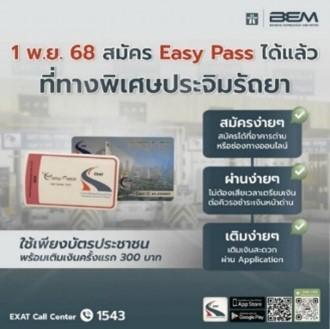
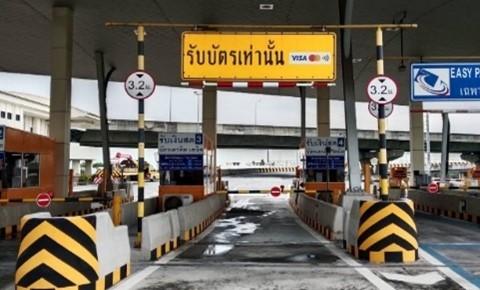
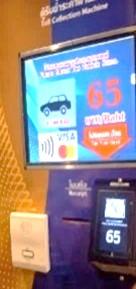
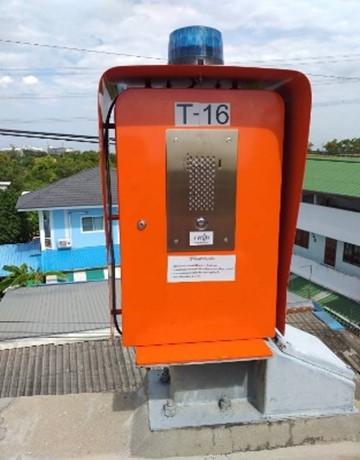
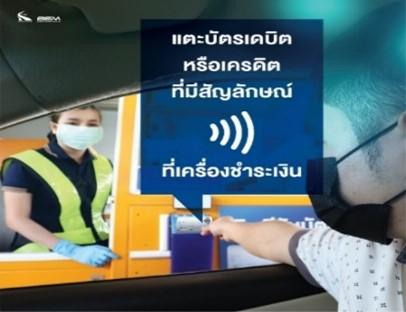
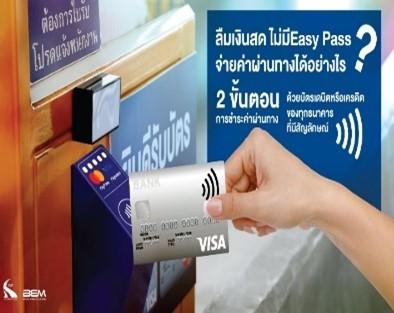
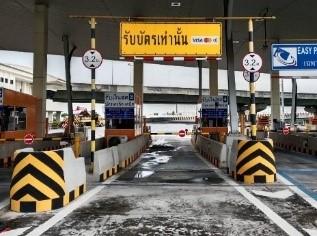
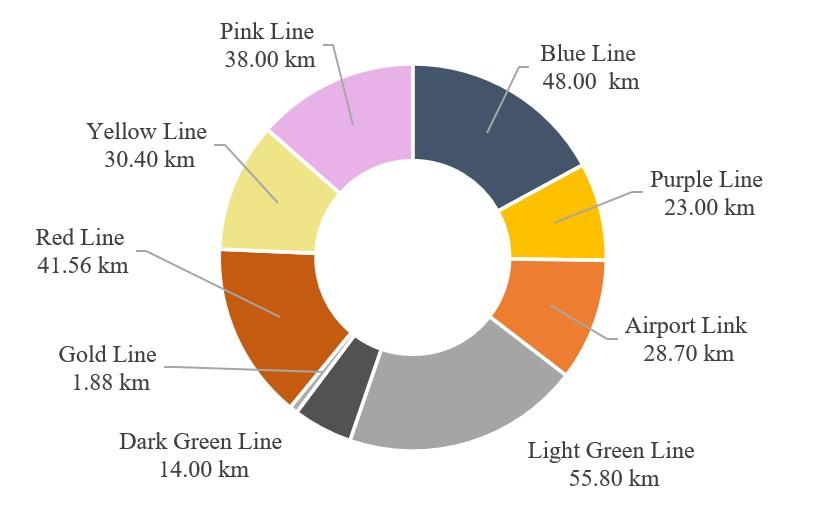
Procurement of Products & Services
Reporting Mode
3116
Per-Business-Group Breakdown
| Procurement |
|---|
|
|
|
Nature of Business — Overview
Introduction
The Company is committed to being a leading, fully-integrated transportation service provider to improve the quality of life of people in society by elevating their journey to a higher level. The Company’s businesses comprise the provision of the expressway and mass rapid transit rail system services, including commercial development directly related to the primary businesses.
Projects Under Construction
Has Projects Under Construction (Y/N)
Yes
Description
The MRT Orange Line Project, Bang Khun Non - Min Buri (Suwinthawong) Section
Since July 31, 2024, the Company has commenced Phase 1 works, with the construction period of not exceeding 6 years. The works are divided into two sections, namely: the MRT Orange Line (East Section), with a period of 3 years and 6 months, and the MRT Orange Line (West Section), with a period of 6 years. As of December 31, 2025, the project progress was approximately 22.97 percent, which was according to schedule. The MRT Orange Line (East Section) is expected to commence service by 2028 and to reach full service for the entire route by 2030.
Procurement of Additional Rolling Stocks and Improvements to the Related M&E Systems for the M.R.T. Chaloem Ratchamongkhon Line Project (MRT Blue Line)
The Company has carried out the procurement of an additional 21 rolling stock and improvements to the related M&E Systems for the M.R.T. Chaloem Ratchamongkhon Line Project in order to enhance efficiency in accommodating the continuously growing passenger volume. Delivery and acceptance of all rolling stocks are scheduled to be completed by the second quarter of 2028.
More Detail
Total Projects
2
Total Project Value
116016.0
Recognized Value
0.0
Remaining / Unrecognized Value
116016.0
Projects
| Project Name | Description | Value | Income % | Est. Years | Est. Months | Est. Completion |
|---|---|---|---|---|---|---|
| The MRT Orange Line Project, Bang Khun Non - Min Buri (Suwinthawong) Section | This work value is exclusive of value added tax. | 109,216 | 0 | 6 | 0 | 2030-07-01 |
| Procurement of Additional Rolling Stocks and Improvements to the Related M&E Systems for the M.R.T. Chaloem Ratchamongkhon Line Project (MRT Blue Line) | This work value is exclusive of value added tax. | 6,800 | 0 | 3 | 6 | 2028-06-01 |
Debentures & Bills of Exchange
Introduction
As of December 31, 2025, the Company has unsubordinated and unsecured debentures in the amount of Baht 39,585 Million, which have not yet been due to redeem. In this regard, TRIS Rating Co., Ltd. assigned the “BBB+” rating to the Company’s debentures with a “stable” outlook on May 29, 2025. The summary of the key details of the debentures is as follows:
Has Debentures (Y/N)
Yes
Debentures
| Debenture Name | Description / Rating | Interest Rate (%) | Outstanding | Maturity Date | Term | Types |
|---|---|---|---|---|---|---|
| BEM266A | 3.3 | 3,335 | 24 June 2026 | 10 | 2789 · Description: Senior Debenture · 2791 · Description: Unsecured Debenture | |
| BEM286A | 3.61 | 2,750 | 24 June 2028 | 12 | 2789 · Description: Senior Debenture · 2791 · Description: Unsecured Debenture | |
| BEM286B | 3.61 | 500 | 24 June 2028 | 12 | 2789 · Description: Senior Debenture · 2791 · Description: Unsecured Debenture | |
| BEM27OA | 3.95 | 3,000 | 21 October 2027 | 11 | 2789 · Description: Senior Debenture · 2791 · Description: Unsecured Debenture | |
| BEM265A | 3.59 | 1,000 | 9 May 2026 | 7 | 2789 · Description: Senior Debenture · 2791 · Description: Unsecured Debenture | |
| BEM295A | 3.84 | 1,000 | 9 May 2029 | 10 | 2789 · Description: Senior Debenture · 2791 · Description: Unsecured Debenture | |
| BEM306A | 3.5 | 1,300 | 10 June 2030 | 10 | 2789 · Description: Senior Debenture · 2791 · Description: Unsecured Debenture | |
| BEM326A | The debenture issuer has the early redemption right on the fifth anniversary from the issue date or on any date thereafter. | 3.78 | 700 | 10 June 2032 | 12 | 2789 · Description: Senior Debenture · 2791 · Description: Unsecured Debenture |
| BEM264A | 2.24 | 2,000 | 28 April 2026 | 5 | 2789 · Description: Senior Debenture · 2791 · Description: Unsecured Debenture | |
| BEM284A | 2.91 | 1,000 | 28 April 2028 | 7 | 2789 · Description: Senior Debenture · 2791 · Description: Unsecured Debenture | |
| BEM314A | 3.33 | 1,000 | 28 April 2031 | 10 | 2789 · Description: Senior Debenture · 2791 · Description: Unsecured Debenture | |
| BEM279A | 3.33 | 1,500 | 5 September 2027 | 5 | 2789 · Description: Senior Debenture · 2791 · Description: Unsecured Debenture | |
| BEM329A | 4.01 | 1,000 | 5 September 2032 | 10 | 2789 · Description: Senior Debenture · 2791 · Description: Unsecured Debenture | |
| BEM349A | 4.15 | 1,000 | 5 September 2034 | 12 | 2789 · Description: Senior Debenture · 2791 · Description: Unsecured Debenture | |
| BEM264B | 2.79 | 1,800 | 3 April 2026 | 3 | 2789 · Description: Senior Debenture · 2791 · Description: Unsecured Debenture | |
| BEM284B | 3.13 | 300 | 3 April 2028 | 5 | 2789 · Description: Senior Debenture · 2791 · Description: Unsecured Debenture | |
| BEM334A | 4 | 3,400 | 3 April 2033 | 10 | 2789 · Description: Senior Debenture · 2791 · Description: Unsecured Debenture | |
| BEM354A | 4.07 | 1,000 | 3 April 2035 | 12 | 2789 · Description: Senior Debenture · 2791 · Description: Unsecured Debenture | |
| BEM272A | 3.07 | 1,000 | 15 February 2027 | 3 | 2789 · Description: Senior Debenture · 2791 · Description: Unsecured Debenture | |
| BEM292A | 3.33 | 1,500 | 15 February 2029 | 5 | 2789 · Description: Senior Debenture · 2791 · Description: Unsecured Debenture | |
| BEM312A | 3.67 | 1,000 | 15 February 2031 | 7 | 2789 · Description: Senior Debenture · 2791 · Description: Unsecured Debenture | |
| BEM342A | 3.96 | 1,000 | 15 February 2034 | 10 | 2789 · Description: Senior Debenture · 2791 · Description: Unsecured Debenture | |
| BEM362A | 4.05 | 500 | 15 February 2036 | 12 | 2789 · Description: Senior Debenture · 2791 · Description: Unsecured Debenture | |
| BEM279B | 3.16 | 2,500 | 12 September 2027 | 3 | 2789 · Description: Senior Debenture · 2791 · Description: Unsecured Debenture | |
| BEM299A | 3.6 | 3,400 | 12 September 2029 | 5 | 2789 · Description: Senior Debenture · 2791 · Description: Unsecured Debenture | |
| BEM349B | 3.05 | 600 | 12 September 2034 | 10 | 2789 · Description: Senior Debenture · 2791 · Description: Unsecured Debenture | |
| BEM369A | The debenture issuer has the early redemption right on the seventh anniversary from the issue date or on any date thereafter. | 4.16 | 500 | 12 September 2036 | 12 | 2789 · Description: Senior Debenture · 2791 · Description: Unsecured Debenture |
Convertible Securities
Has Convertible Securities (Y/N)
No